
Incrediblekids.com Fun for ones & Twos Incredible Babies(TM) one and two year olds free
FREE One Year Old Play And Learn Activities
The second year of your child's life is amazing to be a part of. They are naturally so focused on being able to communicate and being able to fine tune their coordination. Focusing on free play and experiences that allow them to explore their world on their own, should be fun for them and a priority in all that you do with them.
One year old's learn more skills in this year than any other year. (That is amazing because they only have a few minutes of attention span and minimal ability to understand language.) Granted, children should spend about 80% of their time in free play, exploring the world in their own way and as they desire learning in the way that they want.
Yet as my granddaughter turns one, I was appalled at how little is available online to provide themed play and curriculum for one year old toddlers. So I spent the last six months developing activity banks and resources for you.

Your focus on communication and language skills in that second year is crucial to reducing their frustration and crying spells from us not understanding what they want.
I now live in rural New York with a lot of Amish families in our community. I was helping a family of a child with Downs Syndrome when I struck up a conversation about parenting priorities. They concentrate on physical strength and coordination in the first year, like parents all over the world. But around the beginning of their second year they give themselves a new focus -communication and life skills.
They teach only what is relevant to daily life -
(Not the alphabet: because they don't need that until they are reading or writing.) They focus on a babies innate desire to communicate and introduce play/social skills that will grow into life skills based on their every day life.
(Not the alphabet: because they don't need that until they are reading or writing.)
Amish parents master their parenting skills as youth when as they help take care of younger children in their community or sisters and brothers. Coached by their own parents or the parents of the child in their care, they learn to help children explore and learn through play.
To me, they have very Reggio and Montessori-approach. The objective to playfully explore all aspects of Amish daily life with children is pretty much drilled into them before they marry.
They are masters at developing social learning and being committed to teaching everyday life skills for being successful and helpful in their family and community. Makes sense, right?
Learning about the science of nature and what it provides for them is a lifelong goal for them. However, they don't include teaching about things that are irrelevant. As in, the idea of teaching about the ocean if they live too far from it to visit it. If it can't be taught or enriched through everyday life, they don't teach it until later in life. This systematic hands on approach to learning is really effective in teaching the scientific relevance of all that they do through out their lives. They also learn penmanship and basic math skills such as addition, subtraction, multiplication, and division later in life. Science, math and history are taught entirely through hands-on experiences such as farming, woodworking, home making or building.
Babies are wanting to learn to communicate more than anything.
The overwhelming innate desire to communicate will allow them to be motivated and excited while playing (with purpose)

Our Incredible Baby Program Webpages can be found on two of of Incredible Kids Websites.
Incredible Horizons also provides more Incredible Babies topics.
Plus it provides information and support if your child appears to have special needs.
Read on for details on how to work on communication skills with your baby. And a section on skill based activites that you can fit into your daily routine as time allows.
When you are ready for more structured play based curriculum use the FREE themed play in units HERE
Understanding Baby's Nonverbal Cues and Signals
Ways to Communicate With Your Baby

By modeling positive non-verbal communication, such as appropriate facial expressions and warm body language, parents can help their babies understand this form of communication and develop their own skills. This foundation will contribute to their ability to build relationships in the future.
Learn how to understand babies by working toward enhancing your communication with your baby and support the development of their non-verbal communication skills through the following approaches:
As adults, we sometimes overlook the fact that babies cannot yet speak, but they are constantly communicating. It's truly amazing to observe what a baby can convey through their non-verbal cues so ensure that you are encouraging their attempts at communication and responding appropriately.
Receptive and Expressive Language
Discover the key differences between receptive and expressive language in toddler development. Learn why toddlers may have an imbalance between these language skills and how parents can support receptive vs expressive language at home.

Expressive Language Lessons, First Words
How to Encourage Your Child’s First Words!
First words are such an exciting milestone! Learn speech therapist and mom approved speech therapy tips and activities to help your child say their first word!

Building Non-verbal Communication Skills At Home
Teaching your child to play back and forth with you is one way speech therapists build non-verbal communication skills. Learn speech therapy tips and activities to encourage back and forth play at home.

Expressive Language Lessons, First Words 1/15/21
Teaching Toddlers to Repeat Words
Children begin repeating words they hear you say just before they say their first word. See how you can use these fun and doable speech therapy tips and activities to get your little one repeating words.

Expressive Language Lessons 1/15/21
Teaching Kids to Ask for Help
Teaching toddlers how to ask for help when they need it is a common speech therapy goal for young children. Learn speech therapy tips and activities you can use to practice at home.

Teaching Toddlers To Imitate In Play
Toddlers learn to talk through imitation! Help them first by supporting imitation in play. Use these speech therapy tips and activities to grow imitation skills at home.

Toddler Language Milestones, 12 - 24 Months7/21/21
Receptive Language:
What do toddlers understand?
Did you know that toddlers understand 10x (or more) the number of words they can say? Learn about receptive language skills, or what toddlers understand and when.

Teaching Toddlers Plural Nouns
Teaching toddlers to use the plural -s is a fun and exciting w
ay to grow their grammar skills at home. Use the speech therapy tips and activities to help!

Following Directions
Discover practical speech therapy tips to help your toddler develop the essential skill of following directions. Learn about toddler milestones for following directions and enhance their receptive language abilities through practical strategies and engaging activities.

Baby Gestures: Making a big statement without saying a word!
Baby gestures, like clapping, waving, and blowing kisses, are exciting ways that your little one is communicating with you. See why gestures are so important, learn 16 gestures you can teach by 16 months, and my speech therapy tips for teaching baby gestures at home.

Expressive Language Lessons 1/15/21
Teaching Your Toddler To Tell You What Happened
Teaching toddlers to tell you what happened is an important speech therapy skill to practice at home. Use these tips and activities to help your toddler tell you about what happened to them.

Teaching Toddlers How To Ask Questions
Teaching 2 year olds to ask questions is a fun way to practice speech therapy at home. Learn 3 speech therapy tips and activities that you can use for fun and simple practice.

By modeling positive non-verbal communication, such as appropriate facial expressions and warm body language, parents can help their babies understand this form of communication and develop their own skills. This foundation will contribute to their ability to build relationships in the future.
Learn how to understand babies by working toward enhancing your communication with your baby and support the development of their non-verbal communication skills through the following approaches:
As adults, we sometimes overlook the fact that babies cannot yet speak, but they are constantly communicating. It's truly amazing to observe what a baby can convey through their non-verbal cues so ensure that you are encouraging their attempts at communication and responding appropriately.
Receptive and Expressive Language
Discover the key differences between receptive and expressive language in toddler development. Learn why toddlers may have an imbalance between these language skills and how parents can support receptive vs expressive language at home.
Expressive Language Lessons, First Words
How to Encourage Your Child’s First Words!
First words are such an exciting milestone! Learn speech therapist and mom approved speech therapy tips and activities to help your child say their first word!
Expressive Language Lessons 1/15/21
Building Non-verbal Communication Skills At Home
Teaching your child to play back and forth with you is one way speech therapists build non-verbal communication skills. Learn speech therapy tips and activities to encourage back and forth play at home.
Expressive Language Lessons, First Words 1/15/21
Teaching Toddlers to Repeat Words
Children begin repeating words they hear you say just before they say their first word. See how you can use these fun and doable speech therapy tips and activities to get your little one repeating words.
Expressive Language Lessons 1/15/21
Teaching Kids to Ask for Help
Teaching toddlers how to ask for help when they need it is a common speech therapy goal for young children. Learn speech therapy tips and activities you can use to practice at home.
Teaching Toddlers To Imitate In Play
Toddlers learn to talk through imitation! Help them first by supporting imitation in play. Use these speech therapy tips and activities to grow imitation skills at home.
Toddler Language Milestones, 12 - 24 Months7/21/21
Receptive Language:
What do toddlers understand?
Did you know that toddlers understand 10x (or more) the number of words they can say? Learn about receptive language skills, or what toddlers understand and when.
Teaching Toddlers Plural Nouns
Teaching toddlers to use the plural -s is a fun and exciting w
ay to grow their grammar skills at home. Use the speech therapy tips and activities to help!
Following Directions
Discover practical speech therapy tips to help your toddler develop the essential skill of following directions. Learn about toddler milestones for following directions and enhance their receptive language abilities through practical strategies and engaging activities.
Baby Gestures: Making a big statement without saying a word!
Baby gestures, like clapping, waving, and blowing kisses, are exciting ways that your little one is communicating with you. See why gestures are so important, learn 16 gestures you can teach by 16 months, and my speech therapy tips for teaching baby gestures at home.
Expressive Language Lessons 1/15/21
Teaching Your Toddler To Tell You What Happened
Teaching toddlers to tell you what happened is an important speech therapy skill to practice at home. Use these tips and activities to help your toddler tell you about what happened to them.
Teaching Toddlers How To Ask Questions
Teaching 2 year olds to ask questions is a fun way to practice speech therapy at home. Learn 3 speech therapy tips and activities that you can use for fun and simple practice.
Tips for developing early speech during playtime
Teaching Toddlers To Imitate In Play
Toddlers learn to talk through imitation! Help them first by supporting imitation in play. Use these speech therapy tips and activities to grow imitation skills at home.

Teaching your toddler to say new words
One of the most powerful actions you can take as you're teaching your toddler to talk is to say the *real names* of objects or actions many times over. In speech therapy, we call this strategy focused stimulation.

Toddler Toy Car - 3 Ways to support early language
Toy cars are simple, fun, and perfect for practicing speech and language skills at home with your little one. Learn how to use toddler toy cars to practice speech and language at home, no matter what level your little one is at.

Peg Puzzle - At Home Speech Activities
Peg puzzles are perfect for teaching your toddler to talk. See our recommendations for which peg puzzles are best and how you can play to teach your child new communication skills using your puzzles with pegs.

Speech Therapy & Bubbles for Kids
Bubbly play is a great activity for practicing speech at home. See how to play with bubbles for each stage of development and what to say to grow your child’s communication with bubble activities for toddlers.

The "Magic" School Bus Speech Activities
No matter what stage your child is at, you can use a toy bus to build language at home. We share activities for 1 year olds and 2 year olds that you can use to grow communication at home. Learn the same activities used in speech therapy!
Easy Music Play at Home:
Fun Activities for Kids

Welcome to a harmonious adventure designed to ignite your child’...

Fun Sorting Games to Boost Your Child’s Thinking at Home

Learn Animal Sounds: Fun Speech Therapy at Home

Play & Learn: Boost Speech with Fun Animal and Vehicle Sounds

Playful Learning: Teach Kids Object Functions at Home
Welcome to Function Fun, where the ordinary becomes extraordinary through the lens of...

Boost Kids Storytelling Skills: Engage and Educate at Home
Welcome to Storytime Echoes, a delightful journey into the enchanting world of storyt...

Fun Turn Taking Games for Kids: Build Social Skills at Home
Step into the enchanting world of “Turn-Taking Playtime,” where fun and l...

Concepts Adventure: Learn Basic Concepts at Home
Embark on an exciting Concepts Adventure, an educational journey designed to introduc...

Fun Color and Shape Activities for Toddlers at Home
Welcome to the exciting world of Colours and Shapes Exploration, where your child emb...

Build Curiosity & Communication: Fun Question Games
Embark on the Question Discovery, an interactive activity designed to help your child...

Toddler Language Skills:
Fun Phrase Formation Games at Home
Welcome to ‘Phrase Formation Fun,’ a comprehensive and interactive activi...

Emotion Expression Activities for Toddlers: Fun & Easy at Home
Embark on the Emotion Expression Ac, a thoughtful activity designed to encourage your...

At Home Speech & Language Activities - Duplo Blocks
Blocks are one of the most popular toys for toddlers, and there are a seemingly infinite number of ways you can play with blocks to teach your child new talking and understanding skills.

At Home Speech & Language Activities - Small Cardboard Boxes
Learn how playing with a cardboard box can grow your child’s communication skills no matter what stage they are at. See 3 quick and easy at home speech activities with boxes.

At Home Speech & Language Activities - Tupperware
Learn how to grow your child's speech and language skills by playing with Tupperware. We will tell you how to play and what you can say in order to grow your child's skills at 3 different levels: before the first word, when they say 1-100 words, and when they are talking in sentences.

At Home Speech & Language Activities - Baby Dolls
Do you already have a baby doll (or stuffed animal) at home? Learn how you can grow your child's speech and language skills by playing with your baby doll in this post!

3/2/23
Play + Language Developing Together
Play and language develop simultaneously in toddlers. Discover how understanding play and language stages can help you choose the best toddler toys and help your little one reach the next developmental stage.

Toddler Stages of Play
As babies and toddlers get older their play develops and changes. In this post we talk about the stages of play that toddlers progress through. We’ll also cover how toddlers learn to play with one another.

Laundry Games For Toddlers
Laundry games are an excellent way to turn your everyday chores into learning opportunities for your little one. Learn 3 different ways that you can help your toddler learn to talk while doing laundry together.
Speech and Language Practice - The Getting Dressed Activity

Toddlers go through (too) many outfits in a day! We’ve created a guide to practicing speech and language when your toddler is getting dressed. See how to support language development using these simple activities.
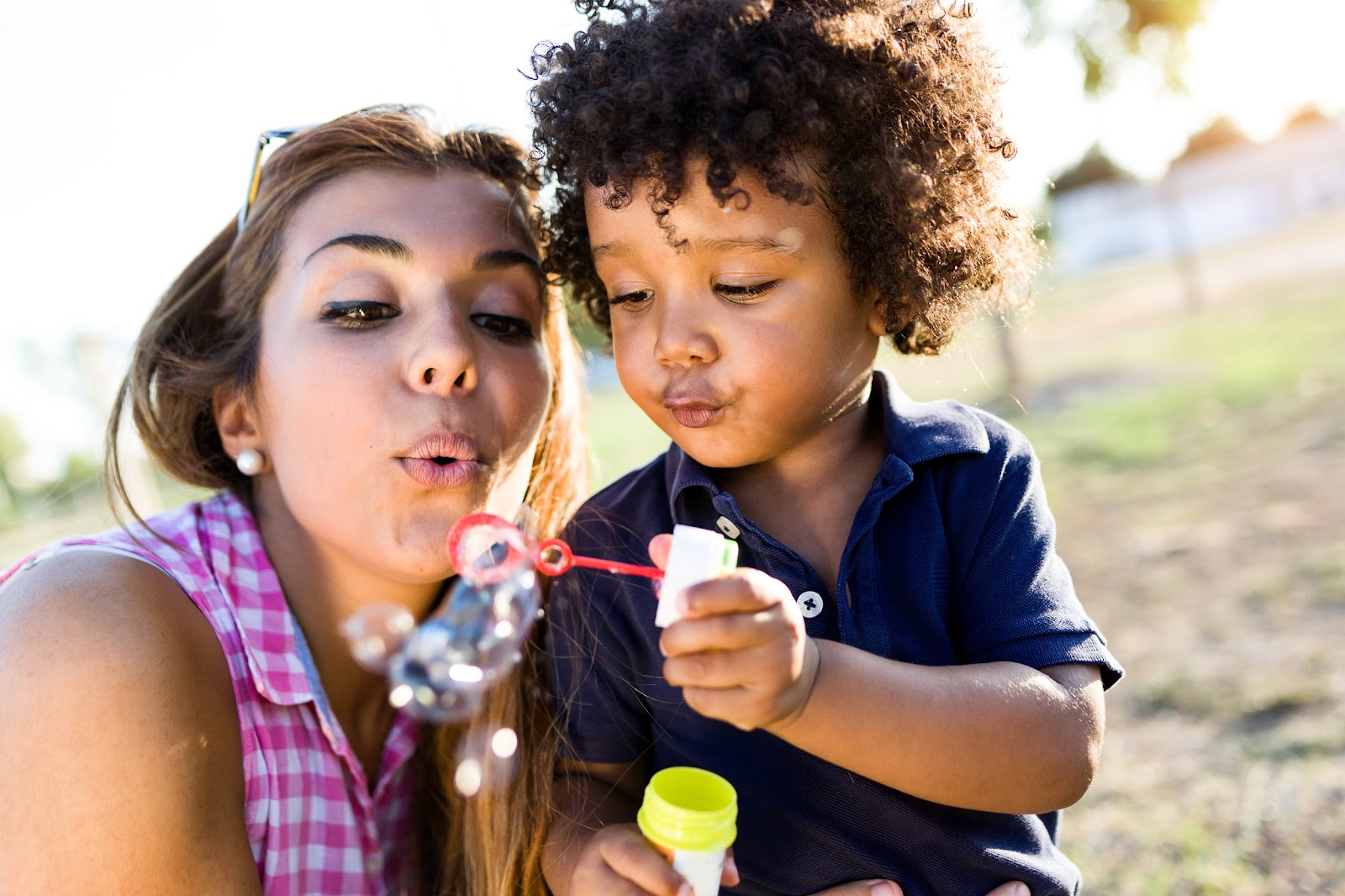
Speech Therapy & Bubbles for Kids
Bubbly play is a great activity for practicing speech at home. See how to play with bubbles for each stage of development and what to say to grow your child’s communication with bubble activities for toddlers.

Cause and Effect Toys
Cause and effect toys help toddlers learn the foundations for communication. See the list of our 10 favorite cause and effect toy for toddlers and how you can use things you already have at home to teach cause and effect.
24 - 36 Months5/18/22
2/21/22
Teaching Your Toddler About Safety
Learn how to teach your toddler about safety from moms and speech therapists. We talk about strategies to help your child stop in dangerous situations and how you can teach them about safety through play.
Encouraging speech for typical children and late talkers
Is your toddler taking their time to find their words?
Don't worry, they might just be a late talker! In this blog post, we'll explore these questions:
How can I practice at home? (TONS of simple & fun activity ideas)
Who is a “late talker”?
Late talkers are children who start speaking later than their peers. Typically, they are between 18 and 30 months old and have a limited vocabulary. They may find it challenging to combine words into phrases or sentences. And, they may have difficulties understanding language.
The term "late language emergence" is commonly used by the American Speech-Language-Hearing Association (ASHA) and speech therapists to describe children who are late talkers. This term is used because these children may experience delays not only in speaking but also in their understanding and receptive language skills. The term "late talker" can be confusing, but it's important to know that understanding skills and speaking skills are closely linked and typically develop together.
How common are late talkers?
Late talkers are actually quite common. Around 13% of children at 24 months old show signs of late language emergence. So if you're concerned about your child's language development, know that you're not alone. Many parents have experienced similar situations, and there is support available to help you and your little one along the way.

Do I have a late talker?
Are you concerned that your child might be a late talker? You're not alone! Many parents find themselves worrying about their child's communication development. In fact, in a recent poll I conducted on Instagram with over 500 parents, more than 80% expressed concerns about their child's communication skills. It's natural to compare your little one to their peers or siblings and feel a bit worried when you notice differences in their abilities.
To help you determine if your child might be a late talker, here are some specific signs to look out for:
Limited vocabulary: Late talkers often have a vocabulary of fewer than 50 words by the age of two, or their vocabulary may grow at a slower pace compared to their peers.
Difficulty with word combinations: They might struggle to put words together to form two-word phrases, such as saying "more juice" or "bye-bye daddy."
Typical understanding (or not): Late talkers may have age-appropriate receptive language skills, meaning they understand language at a level that aligns with their peers.
There’s no easily identifiable cause of the delay: It's important to note that late talkers typically don't have other significant developmental delays or cognitive impairments, such as hearing loss or intellectual disabilities.
If you notice these signs in your child, it may be beneficial to seek guidance from a healthcare professional or a speech-language pathologist. Remember, being a late talker doesn't necessarily indicate a long-term language disorder. Some children catch up to their peers without any intervention, while others may benefit from early intervention services, such as speech-language therapy, to support their language development.
Milestones - A guide for identifying late talking toddlers
It's essential to keep in mind that there's a wide range of what's considered typical development for children at any age. To gain a clearer understanding of your child's progress, it can be helpful to reference milestones or benchmark skills for each age group. By doing so, you can determine whether your child is on track or may require additional attention in a particular area.
Here are some age-specific benchmarks that can assist you in identifying late talking:
At 18 months, look for children to:
Follows some familiar directions
Use gestures, such as pointing or waving.
Copy words they hear you say.
Say about 20 different words on their own.
At 24 months, look for children to:
Understands the meaning of new words quickly
Have a vocabulary of more than 50 words.
Begin combining two words to form short phrases.
Engage in simple conversations using basic language skills.
At 30 months, look for children to:
Have an expanding vocabulary of several hundred words.
Use 3- to 4- word sentences to express themselves.
Combine words to ask and answer questions.
Remember, these milestones are general guidelines, and every child develops at their own pace. If you have concerns about your child's language development, it's always a good idea to consult with a healthcare professional or a speech-language pathologist. They can provide a more accurate assessment and recommend appropriate interventions if necessary.
I think my child’s a late talker… Help!
If you suspect that your child may be a late talker, it's essential to understand that it doesn't necessarily indicate a long-term language disorder. Many children do catch up to their peers without any intervention, while others may benefit from early intervention services like speech-language therapy to support their language development.

Now, you might be wondering, "Will my child catch up on their own?" The answer is, it varies. Research indicates that more than half of late talkers do catch up on their own. However, it's impossible to predict which group your child will fall into—those who catch up naturally or those who may require some additional support for expressive language development.
To determine the best course of action, consult with a speech-language pathologist. They can assess your child's language skills and provide expert guidance. If necessary, they'll recommend strategies and activities to facilitate language development.
As a parent, you play a vital role in supporting your child's communication skills. Engage in interactive activities like reading, singing, and talking with your child to create a language-rich environment. Incorporate play and everyday interactions into learning experiences.
Late Talker Recommendations:
I recommend two things to parents who have concerns about late talking:
1. Start practicing at home!
Many early intervention speech therapy strategies can be implemented by parents. Spend 15-30 minutes a day during an activity you already do to make a difference.
Here are three proven strategies to support late talkers at home during your family's favorite activities (click the links for activities and more information on each strategy!)
Focused Stimulation - this strategy involves repeating the names of people, things, and actions more often to help your child learn
Increase Commenting - Most of us ask a ton of questions! But for toddlers learning to talk, comments are more helpful than questions! It's a small change that can make a big impact on your child's learning.
Following Children's Interest - Pay attention to what captures your child's interest, as it plays a crucial role in learning new words. By following their lead, you'll find that your at-home practice becomes more effective and enjoyable.
2. Schedule a speech and language evaluation.
You may be wondering, “Is speech therapy really necessary? Won’t they just catch up on their own?”
The truth is, it varies from child to child. While some children do catch up on their own, others benefit from extra help in acquiring language skills. That's why I strongly recommend scheduling an evaluation for your child. During this appointment, you'll gain valuable insights into your child's strengths and areas that may require support. Moreover, you'll receive specific techniques to assist your child's language development throughout the evaluation process. Following the evaluation, speech therapy may or may not be recommended, depending on your child’s individual needs.
Request a referral from your pediatrician or contact your state's early intervention program (in the US). Even if your child catches up through at-home practice, it's wise to have an appointment booked in case extra support is needed down the road. Planning in advance provides peace of mind if your progress at home doesn’t go as you’ve planned.
Here are 2 great resources for speech & language evaluation:
Remember, every child is unique, and their language journey unfolds at their own pace. Seeking professional advice and actively participating in your child's language development will ensure they receive the support they need to thrive.
How to support a late talker at home - more ways!
1. Play Activity Guides - I’ve put together guides to growing your child’s talking skills using some of the most popular toddler toys. Check out the suggested activities for your child’s current level using:

2.First Words - resources to help your little one say their first words
Tips & Activities for first words - encourage your toddler to say their first words with these speech therapy tips and activities.
Baby first words list - learn common first words and how to know if your toddler said one
3. Growing Vocabulary - these are my favorite strategies, tips, and activities for helping your child learn to say more words
My favorite strategy for growing vocabulary! - this strategy can be used in any activity!
More tips and activities to grow your little one’s vocabulary - we have tips, activities, and videos to help you practice at home
4. Putting Words Together - support your child in combining words when talking with these speech therapy tips, activities, and strategies
Start putting words together using these speech therapy tips and activities.
Ultimate guide to early sentences - encourage your child to combine 3+ more words at home
5. Kickstart - If you're looking for extra reassurance and personalized support for your late-talking toddler, I'm here to help!
I've been providing one-on-one guidance to families, and it has been a wonderful experience. Families have appreciated the individualized support, and I've enjoyed connecting with them on a deeper level. If you're interested in personalized recommendations and support, I invite you to consider my new Kickstart Program. This program is designed to provide tailored strategies to enhance your child's language development and empower you as a parent. Feel free to reach out to me to learn more about the Kickstart Program and how it can benefit you and your child. I'm here to support you every step of the way on this journey.
Superscript
14 Things To Easily Teach Your
1-Year-Old Through Play
If you’re like me, it’s always on your mind- Am I teaching my child enough? Am I giving her enough attention? Should I be doing more to help her learn? Could I be a better mom?? The mom's guilt is REAL and it’s totally normal.
We always feel like we could be doing more for our children: feeding them better, teaching them more, being more patient with them.
Then, life sometimes gets in the way when we have to go to work, clean the house, make dinner, take kids to activities and practices, and still make time for our husband too.
My granddaughter is 13 months and I’m always thinking, what should Hope be teaching her? Should she start learning her colors? Her ABC’s and numbers? Should she be coloring? Learning how to build block towers or animal sounds?
Maybe this is the occupational therapist in me, since I’m used to teaching babies and children and know that there’s always more to learn. However, I’m sure most moms go through those feelings too.
How are they learning?
Especially at this age, our children are little sponges! They are taking in every little ounce of knowledge about the world around them. Every sound, color, picture, and movement.
Your 1 year old can understand much more than you probably think they can. They are learning every day and even if we don’t realize it, we are teaching them.
They are watching our every move, listening to our every word and picking it up so quickly. So first of all, when you feel like you’re not doing enough, remember that they’re always learning by just watching you all day!
You don’t have to reinvent the wheel to develop activities, especially at this age. Most of these don’t require any set up or materials and just can be done while you’re sitting and playing with them.
Remember, you don’t need high-tech fancy toys for your child. The best way they learn is through problem-solving and imaginative play with objects and toys that are simple enough to do a wide array of things with.
This post may contain affiliate links which I would receive a small commission for if you make a purchase, at no additional cost to you. Please read our disclaimer and privacy policy for full disclosure.
14 Activities You Can Teach Your 1-Year-Old
There is a wide range of differences from a 13-month-old to a 21-month-old so be aware of your child’s developmental level.
Here are a few activities that are simple enough to do everyday to be sure your child is learning:
1. Teaching new words
Your 1-year-old is starting to pick up a huge vocabulary during this crucial age and there is so much for them to learn and explore.
Here are some of the common words, phrases, and concepts that your one year old can pick up at this young age:
Body parts: Point out your child’s eyes, nose, mouth, teeth, head, hair, ears, hands, feet, etc. Show them on their bodies, a doll’s body, as well as your own. Then at other times in the day ask them, Where’s your nose? Where are your eyes? An early 1 year old should be able to point to these body parts when asked and a later 1 year old should be able to start saying the words.
Animal sounds and names: They will love making animal sounds before they can say the animal’s name, but be sure to tell them both and show them pictures as they say it.
Their own name: Of course they should already be able to respond to their name, but they may be able to say their name at this point. Practice the first sounds of their name and make sure they respond to their name when called.
Names of relatives: Teach them common relatives like mom, dad, grandma, grandpa, and siblings, or whoever they see most frequently. Making a picture book of family and friends is a great way to learn their names or even just showing them pictures on your phone.
Manners: Please, thank you, you’re welcome, and excuse me are common.
Vehicles: Cars, trucks, school bus, fire truck, etc.
Foods and utensils: Teach them how to say their favorite foods and the utensils they use: cup, fork, spoon, cheese, bread, banana, etc.
Words to show what they need or want: yes, no, more, need, want, give me, peepee, etc.
Colors: Your child should be able to start matching colors at this point so be sure to name the colors for them.
You can do this while you’re changing diapers, during mealtime, or just while you’re snuggling in bed.
Repetition is so important at this stage. That is the best way that they will pick up new words and phrases. Be as consistent as possible to repeat everything you’re saying over and over.
Here are more tips to get your baby to talk and learn words here.
2. Reading books
Books are incredible teachers of language. Just looking at the pictures of so many new objects, people, colors, and shapes can spark much curiosity and learning in their minds.
My daughter LOVES books. She will hand us a book to read to her and snuggle up on our lap.
Even though her attention span usually only lasts through 3 pages, she is so excited to look at the pictures and colors.
Lift-the-flap books are her favorite and toddlers love lifting the flap to see what's behind it. We have a ton of baby board books at our house, but if you don’t, you can go to your local library and lend them out.
Most libraries also offer free storytime in the mornings so check their events to see what baby/toddler activities they have.

You don’t have to actually read the book word for word, but point out every picture and describe it. Have them repeat it back. This will help to improve language.
When you’re reading, tell the child to turn the page. Also, ask your child to point to a picture.
If you are the one reading, use your finger to follow along with the words on the page so your baby learns to recognize letters and words.
Related Post: The Outstanding Benefits of Reading to Babies and Toddlers
3. Describe what they’re doing (Developing language)
If she’s merely just sitting and playing, use language to say everything she’s doing and using, the color and shape of an item, and what action is happening.
For example, “You’re putting the bead in the cup, you’re throwing the red ball, you’re walking over to the steps.” Your child will now be able to associate words with his or her actions.
Related Post: How to Teach Your Toddler to Talk
4. Promote Independence

Your little one is probably begging to start doing things on her own by now. She will grab at the spoon, toothbrush, and even diaper wipes. Let them try to do these things on their own!
The only way a child will learn new skills is by doing it by themselves. So give them these opportunities to learn, understand, and make mistakes (within limits, of course).
Of course they may not be very successful at it, but don’t be intimidated by the mess it will make or that they won’t be able to complete the task.
Guide them in parts of the activity that they actually can complete.
They should be able to assist in areas like:
dressing: socks off, pulling pants up, putting arms through shirt, putting on/taking off coat
feeding: using utensils, finger feeding, choosing meals and snacks by pointing or asking and saying yes or no
brushing teeth: holding toothbrush
cleaning up: wiping up messes, putting toys back into their bin
going up and downstairs (with supervision and hand-holding)
opening containers
Tell them to pull the shirt down over their head or put their arms through and try to get their hand unstuck from the sleeve. Let them hold the brush to brush their teeth or hair, hold the food pouch and fork to feed themselves, and clean up their own toys into a bin.
Practice makes perfect!
Related Post: Why It’s Important to Let your Baby Feed Themselves
5. Pretend play

Using their imagination opens up a world of fun and play for your toddler. This skill typically comes naturally as they copy and imitate what they see in the real world, in books, or on tv.
Whether it’s a play kitchen, tea party set, feeding a baby doll, driving a car, or sweeping the floor, your little one will love to participate in activities that she sees you doing.
See more examples of pretend play items here: Developmentally Appropriate Toys for a 1 Year Old
6. Inset Puzzles

Puzzles are great for developing so many skills!
They’ll be developing hand-eye coordination with flipping and turning the pieces to fit them in their slots, fine motor skills by using their little hands to grasp and manipulate the little pegs or whole wooden pieces, and problem solving by letting their brains figure out the best ways to fit the piece in the space or where it’s matching counterpart is.

At the same time, your child can be developing cognitive skills while also learning the concepts of the pictures on the puzzle, whether it be colors, shapes, animals (like the one above) or this one, foods, etc.
Chunky peg puzzles are best for younger 1 year olds, but as they get older, they can do puzzles of smaller sizes.

Name puzzles, such as this one from Bloom Owl, are so great with teaching your toddler the letters in their name. After playing with these puzzles, they’ll be spelling their name in no time!
7. Singing songs with gestures
I’m sure you’re well aware of all the kiddie songs, such as The Wheels on The Bus, Row Row Row Your Boat, Old McDonald, etc. You can be singing these songs at any time: in the car, changing diapers, giving a bath.
Children will love the rhythm and music. Demonstrate hand gestures while you’re singing and your baby will be sure to imitate!
This helps them in learning parts of the body, concepts like up/down, open/close, and sounds of animals, to name a few.
These are my daughter’s favorites:
Head, shoulders, knees, and toes
Itsy, bitsy spider
Wheels on the Bus
Row, Row, Row your boat
Old McDonald
Related Post: How to Child Proof Your Home
8. Coloring

This is a great fine motor activity that 1 year olds should start practicing. It teaches them cause and effect: that they make a mark on the paper and it stays there.
All you need is paper and crayons. I highly suggest these finger crayons for the young ones. They are perfect for little hands and promote a good grasp when holding the crayons.
Related Post: 6 Good Habits You Should be Teaching Your 1 Year Old
9. Teaching Colors

Everything your child plays with or touches has a color. It’s easy to point out colors to them and even group things by color.
For example, if you see a red ball, red crayon, and red block in their toy box, show them all of these together and that they are red.
They should really start being able to distinguish different colors around 18 months. They will know the difference between them, although naming them may still be difficult.
Related Post: How to Teach Your Baby to Walk
10. Making Music

Babies LOVE music! They can make music on their own or while listening to music played on the radio or sound system. If you have toy instruments like maracas, xylophone, tambourine, etc. that’s great to use, but you can also make musical ‘instruments’ with so many household objects.
You can have them shake a pill bottle (child safety sealed, of course) to make noise, bang a wooden spoon on a pot, box, tin can, counter top to make various sounds, fill plastic easter eggs with uncooked beans or rice and shake them.
11. Dance
Turn up the tunes on your tv, radio, or Amazon Alexa, and dance with your toddler! Every baby loves to get their moves on when they hear music. They’ll have fun and it will tire them out quickly too!
12. Get Outside

Kids love the outdoors and get stir crazy when you keep them inside all day. Take them for a walk and point out all the sights you see: green trees, blue sky, house, car, road.
They’re soaking up all of this vocabulary so get them to see a little more.
Blow bubbles, pick up leaves, or run through the sprinkler. If they need to be outside to run around and get some energy out, sitting in the grass is a great sensory experience. Getting some sunshine and running around a bit will even tire them out if they’re refusing a nap.
13. Stacking blocks

This activity also helps improve your child’s hand-eye coordination and spatial awareness. Just take a few blocks and demonstrate how to build a tower, then hand them the blocks and ask them to do it. They should pick it up quickly and want to imitate you.
This Melissa & Doug Alphabet block set is great for older 1 year olds to stack, but great fine motor practice for the younger ones. Kids also love Mega Bloks which are great for stacking, putting together, and taking apart.
Stacking toys and activities like these encourage imaginative play and let them problem solve and investigate the world around them.
14. Uninterrupted one-on-one time
PUT YOUR PHONE DOWN AND PLAY! Trust me, I’m so guilty of it too. With all the technology we have access to now, it’s hard to just spend the time sitting on the floor playing.
I try to dedicate at least 20-minutes a day (I know that doesn’t seem like a lot at all) when I am completely in the zone with my toddler. I ask her what she wants to play with, what song she wants me to sing, or what book she wants me to read.
I made it a goal that I would just sit down in her play room and have fun for a block of time throughout the day. I don’t bring my phone or laptop in and we just play. It may seem like they’re too young to know that you’re not paying attention to them, but trust me, they’re always watching. Your child will appreciate the one-on-one time more than you know.
Related Post: How to Show Your Toddler Attention with a New Baby
Try out these fun and simple ways to teach your one year old new things. You’ll be surprised at how much they are taking in!

75 Easy Sensory Activities For 1 Year Old Toddlers At Home
Inside: A bumper list of easy sensory activities for 1 year olds, to keep your young toddler engaged at home.
Once your infant reaches the 12 month mark and is more physically active, alert and inquisitive about the big wide world, you may find yourself wondering what next?
How can you entertain your 1 year old at home all day?
How can you provide your young toddler with the opportunity to continue their healthy development?
It can feel a little overwhelming, but don’t worry.
There are just so many easy sensory activities for 1 year olds you can try at home.
There’s no need for expensive baby classes! (Although these are a great way to get out of the house and meet other moms.)
You’ll likely have all the tools you need already to provide easy sensory play ideas for your 1 year old.
Here you’ll find plenty to inspire you. Once you’ve got the gist, I’m sure you’ll find yourself conjuring up even more sensory activities for your 1 year old on the fly.
This post contains affiliate links. If you click on one and make a purchase, we may receive a commission at no extra cost to you.

What sorts of things are 1-year-olds learning & exploring?
1-year-olds are a blank slate. They have much to learn. They’re learning about themselves and the world around them. They’re exploring colors, shapes, textures and concepts constantly, experimenting and taking it all in. Their little brains are working so hard!
Here are some specific skills your baby will be learning at a year old:
Fine motor and gross motor skills
Musical instruments, wooden chunky puzzles, shape sorter toys, and blocks are some fine motor manipulatives that 1-year-olds love to explore. Through playing with these types of toys, your baby is learning the different shapes, spatial relationships, cause-and-effect, problem-solving, and more.
Your child will begin to learn body awareness through gross motor play. Climbing structures, age-appropriate swing/outdoor sets, push-and-pull toys, and water/sensory tables work to develop your child’s gross motor skills.
1-year-olds are learning how to walk, jump, throw, and climb. They’re also learning how to balance.
Language skills
A child’s vocabulary is built primarily through observations and experiences.
Through play, your 1-year-old is learning many new words, and phonetic sounds. They’re also learning about the letters of the alphabet. This comes together nicely to build their literacy skill foundation that will promote their language and speech development.
Cognitive abilities
1-year-olds are beginning to learn problem-solving skills through play and exploration. They’re learning to make connections between objects and experiences.
What are sensory play activities?
Sensory play is the expression and acquisition of knowledge and skills through exploration. Simply and more deliberately put, sensory play activities are focused on a child’s use of their five senses and engages them in learning.
If you’re wondering, what activities can you do with a 1-year-old? How you can stimulate your baby to ensure healthy development? How can you entertain your young toddler all day?
The answer to all of these is sensory play.
MESS-FREE Sensory Activities for 1-Year-Olds
If you’re looking for a quick sensory activity to set up for your 1-year-old baby at home, this is the place to look first. Clean and dry, these sensory play ideas are a cinch to both prep and tidy up.

1. DIY Ball Pit
All you need to make a DIY ball pit is a baby pool or large cardboard box and colorful plastic ball pit balls. And of course your willing 1 year old, who will need no invitation to get involved in this fun sensory activity.
You could facilitate this indoors or outdoors, making it fun for any time of year. You’d be surprised at how many ways your child will engage in this activity, as it is very open-ended.
In the summer months, add water and bubble solution to the colored balls and let your 1 year old enjoy a jacuzzi like experience!
2. Contact paper fun
Tape some contact paper to the table, wall or even a window. That may be all you need to do! The stickiness may be all they need for an entertaining and experimental sensory activity.
You can also provide your 1 year old with different safe objects for further sensory experience. Furry pipe cleaners, tissue paper, pieces of felt, strips of newspaper… paper or plastic straws.
See what intrigues and entertains your 1 year old and simply follow their lead. One of mine got such a kick out of sticking his pacifier to the contact paper wall, taking it off, and sticking it on again.
3. Plastic Egg Play
Plastic eggs aren’t just for Easter time. Your child can create egg towers using the plastic eggs in halves. They can scoop them up with kitchen utensils, hide toys inside, rattle them in a closed plastic container, sort by color… a fun activity with endless possibilities.

An easy sensory play idea for babies under a year old is to turn plastic eggs into rattles, by filling them with rice or dry pasta.
Related post: 19 Cute & simple Easter activities for babies (sensory, art & more!)
4. Toys & Muffin Tins
Playing with small toys and a muffin tin is a great and easy way to introduce your child to early counting and sorting skills. As they move each toy object from compartment to compartment in the muffin tin, their fine motor skills particularly the pincer grasp, and cognitive abilities are strengthened.
You could also try placing balls into muffin tins for your 1 year old play and experiment with.
5. Tupperware Exploration
Everyone has a dreaded Tupperware drawer, right?! You open it, everything spills out, you can never find the right lid… This will be heaven for a 1 year old – a great sensory activity and opportunity for exploration.
I specifically keep all our plastic containers and lids in a drawer easily accessible to our 1 year old twins. They have fun emptying it then trying to lid and unlid all the various Tupperware in the drawer nearly every single day, while I’m cooking. Fun and such a good exercise to strengthen fine motor skills.

6. Texture Walk On
The sense of touch shouldn’t just be limited to the hands. Little feet like to explore too!
Provide bins full of different textures and materials for your 1 year old to walk in, and move to and from. Of course they may well want to prod and explore with their hands too, but the idea is to provide ways in which they can walk on the different textures.
You could also simply place different textured items on the floor for them to walk over and through, such as bubble wrap, piles of ribbon/paper scraps, aluminum foil, cardboard egg cartons and other household items.
Be sure to tape large slippery items to the floor, for safety.
7. Explore Silicone Kitchen Utensils
Silicon has a lovely soft feel to it which your 1 year old may not be familiar with. In addition, versus traditional metal ones, silicon utensils are safer and easier for little hands to handle.
You could also use them to create a scoop-and-pour sensory activity with a sensory bin and water. They also work well as musical instruments (my children’s preferred method) or why not paint with them.

8. Play With Jingle Bells
Play with jingle bells all year long! Turn on some music and create a dance party with the jingle bells. You could also make a sensory bin or bottle and fill it with jingle bells, or put down a piece of contact paper for your baby to stick the jingle bells on. Again, be led by your 1 year old.
9. Tissue Paper Ripping
This activity is as simple as it sounds. Simply provide tissue paper in various colors for your child to explore and rip up.
This is a tactile experience and involves three of the five senses: touch, sight, and sound. Such a simple sensory play activity for babies and young toddlers.

10. Walking And Crawling On Bubble Wrap
Bubble wrap is engaging and intriguing for infants. Simply tape bubble wrap to the floor to secure it and then let them follow their curiosities.
The simple joy of walking and playing with bubble wrap underfoot has become a favorite activity for all 4 of my children. My elder 2, at 5 and 6, still enjoy this now so it can keep them and their toddler siblings busy for quite some time!
11. Crinkly Paper Play
This activity is so open-ended. Simply gather various types of crinkly paper, for example large chocolate wrapper, baking parchment, newspaper, aluminum foil and so on.
The plastic tray inserts from boxes of chocolates make a lovely crinkly sound and are also very robust so can provide a fun sensory activity for many days.
Crinkly paper and other tactile materials are great to include in a busy basket. Simply fill the basket and let your child explore however they choose.

12. Mirror Play
Provide a soft tummy time infant mirror or a Montessori mirror for your baby to explore their physical features and the texture of the shiny mirror. Or you can simply use a full length mirror as long as it’s secure.
If you want to extend play you could turn it into an artistic sensory activity for your 1 year old. Simply put a couple of drops of paint on the mirror and let your baby experiment with their fingers scribbling and color mixing.
You can then transfer their “artwork” by pressing a blank piece of paper on their work.
13. Rubber band play
Wrap rubber bands around a plastic bottle and let your 1 year old stretch them and fiddle. They may even try to take them off. A simple sensory activity that’ll also challenge fine motor skills.
14. Masking Tape Stick And Peel
Provide your 1 year old with pre-cut strips of masking tape while at the high chair or sitting on the floor. Let your child press tape strips on and remove them over and over.
Your young toddler might enjoy sticking the tape to various other objects too. Try a erase board, ball, board book or toy. Such an easy sensory activity for 1 year olds.
Recommendation: fold over one side of the tape creating a small tab so it’s easier for your infant to grab and pull to remove.

15. Touch and Feel Books
Touch and feel books present the perfect opportunity for on-the-go sensory exploration. They introduce different textures to your baby in a mess-free, low key way, providing an easy sensory activity for your 1-year-old.
16. Play Silks
Play silks/dance scarves are fun to play with and can also be easily incorporated into other activities Stuffing them into a tissue box or Oball makes for a fun sensory activity for a 1 year old who will enjoy pulling them out and stuffing it back in.
They’re also a great addition to a dressing up box for the toddler years, to use as capes, wings or a wrap dress for a princess. With all their different colors, they can also be used to create a huge sea, river or landscape. The possibilities are endless!
17. Mess free painting
This should be a way to get your little ones artistic creations on record, without any mess! Sounds too good to be true, right? Simply purchase a small canvas, apply blobs of paint and then loosely but securely wrap with plastic wrap. Then let your 1 year old enjoy this fun mess-free paint sensory activity.
You could also use regular paper taped to a large wooden board or plastic chopping board instead of the canvas.

18. Pompoms and ice cube trays
Large colored pompoms are fun for young toddlers to play with – just be sure they don’t make it into their mouth. Your 1 year old will enjoy placing them and moving them around the compartments of ice cube trays. You can add toddler-friendly fine motor tools for them to use too.
You could also use colored cotton balls.
Sensory Bottle Ideas For 1-Year-Olds
Sensory bottles are a wonderful way for infants to explore smaller items that may pose a choke hazard. So save those used plastic water bottles, because you’ll be able to put them to good use with these sensory bottle ideas.
Sensory bottles make great DIY sensory toys for taking out and about. They make a good sensory activity to keep a 1 year old engaged while waiting at the doctors or sat in a high chair at a cafe.
Just make sure the lid is taped tightly shut so the contents don’t empty into your handbag!
19. Glitter Calm-Down Bottle
To make a glitter bottle, you can keep it simple and just use water, glitter, and drops of food coloring. You could also jazz it up if you want by adding small toys like lego, sequins, beads, craft gems, and more.
If you want to slow down the movement of the bottle’s materials, add glitter glue, glycerin, or gel hand soap to increase the viscosity of the liquid.

20. Themed Festive Bottle
Fill a clear plastic bottle with items relating to the current time of year so your child can enjoy seasonal concepts.
For example, you could try jingle bells at Christmas or twinkly lights – pictured above in a giant plastic bottle. Or how about acorns during autumn, seeds during spring, and flowers during summer. An easy way to provide a themed sensory activity for your baby or toddler.
Check out more Christmas sensory activities here: 50 Christmas sensory activities & bins for toddlers & preschoolers
21. Rainstick Sensory Bottle
Rainstick sensory bottles are easy and fun to make. Add dry materials such as dry rice, sticks, dry pasta, dried beans, and other materials to create homemade rattle that makes a rain sound.
A rainstick bottle can be used as a DIY musical instrument as your child can shake it to the beat of their favorite songs. This activity presents tactile, auditory, and visual learning.

22. Loom band sensory bottle
Loom bands make for a fun filler for a sensory bottle – they float and almost dance around. Simply add a handful of them to a bottle filled with water. Then add a few drops of glycerin.
23. Lava Lamp-Style Bottle
Bring some ’90s-era inspiration into your child’s play with a lava lamp. You could make a homemade version (using water, oil, food coloring, and Alka Seltzer tablets), or you could purchase a pre-made lava lamp.
Sensory Bag Ideas For Your 1-Year-Old
Just like sensory bottles, sensory bags allow the exploration of small items that could potentially be dangerous for a baby or young toddler. They’re also simple to set up and can be used time and time again, just like the bottles.
So grab some resealable plastic bags and get ready to provide your 1 year old with plenty of easy sensory activities.

24. Water Beads Sensory Play
Water beads are an exciting new texture for your baby to feel and play with, as long as they’re contained in a securely fastened bag. You can find them on Amazon or at a craft store.
Fill a container with water beads and water and let it sit overnight so the beads soak up all the water.
The next morning, simply place them in a resealable plastic bag, tape to secure and let your child explore.
25. Mess-Free Bag Painting
Fill a resealable plastic bag with a sheet of paper and some drips of paint. Seal the bag and tape it to a surface for your child to press and manipulate and create their own masterpiece.
This method of painting is great for kids that don’t like to get messy. You’ll appreciate the lack of cleanup too!
26. Window Hair Gel Bag Exploration
This activity is a great, introductory way to expose your baby to colors, which builds the foundation for color identification knowledge later on.
All you need to do is to fill resealable plastic bags with clear hair gel and food coloring. Make each bag a different color and tape to the window to create a rainbow.
They’re fun to look at and, if you can tape them to a window low down, your 1 year will enjoy the sensory experience of squishing and prodding them.
Other Easy DIY Baby Sensory Toys
Here are some more DIY baby sensory “toys”’ that can be used repeatedly once created. They’re easy and straightforward to make with things you’ll likely have at home already.
Like sensory bottles and bags, plenty of them make for easy sensory activities for young toddlers and babies when you’re on the move and need to keep them entertained.

27. Sock Puppets
Turn socks into fun friends! This is a classic and easy activity. Simply gather a few socks from around the house.
You can use the socks as is, or you can add googly eyes to them to add some extra fun. Use your sock puppets in read-alouds to further engage your child.
28. Wipe Dispenser Sensory Box
Does your baby or toddler think it’s a fun idea to empty the wipe dispenser? If I accidently leave a box of wipes on the floor, next minute half the wipes are out. All over the place!
The answer: give them their very own wipe dispenser box filled with things they’re allowed to have and will enjoy playing with. Think fabric scraps, washcloths, paper scraps.
You could also use a tissue box to stuff things inside.
A fun sensory play idea for your 1 year old that will also strengthen their fine motor skills.

29. Homemade Taste-Safe Playdough
You can easily make edible homemade playdough using 1 cup of frosting and 2 cups of powdered sugar.
Helpful hint: Funfetti frosting comes pre-colored. You could use food coloring with white frosting too.
Playdough is so versatile, and with a recipe this simple you may be able to get your 1 year old involved in this making it too.
30. Touch And Feel Board
This is a wonderful sensory activity for 1-year-olds. Simply attach multiple materials of different textures to a poster board, and allow your child to touch and explore.
Some examples of materials you could use are paper scraps, wrappers, dried uncooked rice and/or pasta, craft poms, cotton balls, bubble wrap, and more.

31. DIY Busy Board
You can make this as complex or as simple as you want. Simply attach multiple buckles, snaps, and locks to a wooden board.
You could also make a busy board with felt or poster board and glue on lighter items such as velcro strips and shoelaces.
If dad or grandpa is a keen DIYer, this is one for them.
32. DIY Snow Globe
A DIY snow globe is a little like a sensory bottle, with craft and nature items floating around a water, glycerin and glitter mixture.
However, you can make it more like a shop bought snow globe and glue characters or interesting objects to the lid of a Mason jar, which becomes the base of the snow globe.
Since the jar is made of glass, this a sensory play activity you’ll have to do together with your 1 year old. Also, stick to carpeted rooms rather than those with tiles.

33. Bottle Top Posting Tin
All you need for this fun and noisy sensory activity for your 12 month old is a large tin or plastic box and some bottle tops.
Simply cut a slit in the top of the tin and show your child how to push and drop the bottle tops through the slit. This is a sensory activity that your 1 year old will love! Young toddlers just love to post things.
An aluminum tin is ideal as it makes the sound louder and more exciting.
Once full, your toddler will probably enjoy shaking the tin or bottle like a maraca and making “music”.

34. Sensory Balloon Eggs
Sensory balloon eggs provide a fun tactile sensory activity for 12 month olds – all little kids in fact. Simply fill a balloon with flour and tie the top. Give it a squeeze and you’ll know why they’re also called DIY stress balls.
Make a few and experiment with different fillings, like dried corn, rice, beans, oats, beads, sand etc. Then let your child explore all the different textures.
Sensory balloon eggs are great for baby sensory play but will appeal just as much to older kids. My 5 year old particularly enjoys playing with them. They’re also a great tool for emotional regulation.
Dry Sensory Bin & Tray Ideas For 1-Year-Olds
These dry sensory bin and tray activities for 1-year-olds are so simple while helping to develop your child’s fine motor skills. They’re all quite open-ended, leaving plenty of room for experimentation and make it easy to tailor to your your young toddlers individual interests.

35. Rice, Scoops, & Cups
Fill a bin or tub with uncooked rice and provide different types of scoops and cups for your infant to explore. If you want to add an additional visual element, you can dye the rice with food coloring first.
To dye rice simply soak it in water dyed with food coloring overnight. Or why not use blue food coloring for half the rice and yellow for the other half. Provide the two colors in separate bins and and allow your 1 year old to mix them together to make green.
36. Dried Pasta & Ice Cube Trays
Fill an ice cube tray with multiple types of uncooked pasta of various shapes and sizes. You could add in colored pasta too. Your child will enjoy manipulating the pasta, moving them around and sorting them into different compartments.
A muffin tin would work just fine, too.
To extend this easy sensory activity, you can also provide your 1 year old with measuring spoons, cups and tongs and other baby-safe kitchen utensils for them to maneuver the pasta with.

37. Play with Beans & Pulses
Playing with beans is a fun no-prep sensory play activity for a year old at home. You can also add some color in by dying them first. Do dye the beans:
place them into a resealable plastic bag
add food coloring and a squirt of hand sanitizer
shake the bag to mix
empty the dyed beans onto a sheet of wax paper or wooden board
spreading them out so they can dry
once dry, they’re ready for play
Add the colored beans to a sensory bin and watch your child’s eyes light up as they explore.

38. Bottle Tops
Collect bottle tops and caps of different sizes and colors and when you have enough you can provide a cheap, fun and easy sensory activity for your 1 year old. They can sort them, stack them, shake them around in the bin and simply explore.
You could also provide some large tools, like a wooden spoon or a slotted spoon and some tubs so your toddler can try to move them out of the bin into the tubs, sorting by color or size as they go. Or not sorting at all! Just let them play.
39. Formula Spoons
Formula spoons are another thing you can accumulate a lot of very quickly. I have a whole stash of formula spoons I’ve collected over the years. They’re the ideal size for little hands and safe too, so are ideal to incorporate into sensory activities for 1-year-olds.

40. Cloud Dough
To make cloud dough, all you need is 2 cups cornstarch and 1 cup scented conditioner. Put both ingredients in a bowl and mix with a spoon, then knead with your hands.
Empty into a sensory bin or tray and let your child explore with or without tools. The texture is soft and silky and will be very intriguing for a young toddler. They may not even need tools, just be led by your child.
Store in an airtight container after play to reuse. .

41. Blended Cheerios (Edible Sand) Sensory Bin
Got a box of Cheerios in the pantry? (I seem to have at least 3 at any one time…)
Grab a box of and crush the Cheerios into a fine powder using a blender. The Cheerio powder will be visually similar to sand, but will be edible too, making this an ideal sensory activity for 1 year olds that like to taste everything.
Place it in a sensory bin and add cars or other toys/tools your child desires. A fun and edible alternative to sand for a sensory bin.
Sensory Water Play Activities For Babies
Water play is so simple and easy to facilitate, while also fully engaging your child in play. These water sensory activities for 1-year-olds will be exciting for little hands to explore.
42. Squeeze Water Out Of A Sponge
This sensory activity is easy to set up and facilitate. Provide a tub of water, or do this activity while in the bathtub.
Give your child some sponges for them to soak up and squeeze the water out of. This strengthens the muscles that will eventually assist them in writing later on.

43. Play With A Water Table
Playing with a water table is as simple as it sounds. Simply pour in some water and let your toddler splash, scoop and pour. Add a couple of water-friendly toys if you like.
If you don’t have a water table yet for your 1 year old, this is a good time to get one. (Here’s a water table that’ll keep your young toddler busy year after year.)
If not you, a large roasting dish or oven dish on top of a low table or on the floor will also do the job.
To add a visual element to this simple sensory activity, add colored bath tablets or food coloring to the water.
44. Pouring With Water Cups
Pouring is a wonderful action for acquiring and strengthening your child’s fine motor skills. It also works on cognitive skills, such as problem-solving and cause-and-effect. Provide your child with cups at the water table or at bathtime.
Make sure you provide cups that are small enough for your infant’s hands to grasp. A variety of cups would extend their learning (cups with handles, spouts, open cups, etc.)
45. Baby Pipettes
Toddler-sized pipettes make for an exciting addition to water play. You’ll probably need to help them fill the pipette but a 1 year old should be able to squeeze and will love seeing the water squirt out the end. Squeezing the pipettes is a good fine motor activity, helping to strengthen the muscles in the hands and fingers.
Your child can also paint with pipettes by dripping different colors of paint or watercolors onto a coffee filter or kitchen towel. The colors will spread and merge across this type of paper adding a little artistic excitement to an easy sensory activity.

46. Bubble Bath
This sensory activity is something you may often do at bathtime already! Kids, big and small, love a bit of bubble bath every now and again. If we get ahead on our bedtime routine, I like to plan an extended bathtime session and add some bubbles.
My 1 year old twins love it and one of the older kids normally get in too – they don’t fit in all that well if they all get in together now.
You could also add a bath bomb or colored bath tablets, to make it even more fun. They’ll need no encouragement to play with the bubbles! Embrace your inner child and play with them too.
47. Animal Washing Station
This activity works best at the water table or with a large tub of water outside. Provide sponges and scrub brushes with animal figurines. You can add soap to the water too and kill two birds with one stone by actually getting some of the toys clean!
Let your child wash the animals with the sponges and brushes you provide. My kids really enjoy this sensory play and love to make all the different animal sounds as they go!
48. Ball Pit Balls
Add ball pit balls to your water table or a tub filled with water. Provide large scoopers or shovels, slotted spoons cups, ladles, and bowls for your child to maneuver the balls with.
You can help them with color recognition by naming the colors of the ball they’re handling. Your toddler will also start to learn introductory information on sorting by color through this activity.

49. Flower Soup
Simply make soup with flowers! This is such a fun outdoor activity for toddlers for the warmer months.
Start by scavenging the garden or park for flowers and plants. Break off petals and leaves – these are the ingredients for this fun sensory play idea. Provide your 1 year old with old saucepans and something to stir and mix with. Little cups, wooden spoons, a funnel, and kitchen utensils would enhance the dramatic play of cooking “soup”.
You could also add glitter to the water if desired. I like to add food coloring to water bottles as additional ingredients too.
Be sure to try their culinary masterpiece when they’re done! There’s plenty of opportunity for a little tea party after, or soup party, should I say.
50. Citrus Water Play
Fill a tub/bowl/bin with water and slice some fruit, such as lemons, oranges and limes. You could cut them into wedges or wheel slices. Put the fruit in the water and your child can explore using all of their five senses.
51. Painting with water
A large sheet of cardboard, paint-brush and small tub of water is all you need for this fun painting sensory activity for your 1 year old. Simply let your toddler paint with the water. They may get wet, but won’t end up head to do in sticky colors, like most baby painting activities!
Edible Sensory Play Activities (Messy!)
Eating AND exploring? What could be better for a young toddler or baby? There will definitely be a mess factor in these edible sensory activities for 1-year-olds at home. But the fun they bring will make it worth the clean up!

Eyeball spaghetti from Simple Everyday Mom
52. Spaghetti Sensory Play
Cooked spaghetti is such a fun texture for your baby to play with. You can choose to dye the spaghetti with food coloring or just leave it as is.
This spaghetti sensory play activity could be tailored to seasons and holidays by using specific colors and adding relevant toys and items. I love the spooky eye ball spaghetti sensory bin above, put together for Halloween.

53. Whipped Cream Painting
There are a couple of options for a whipped cream painting activity. You could paint with it in the bath, to contain the mess. Start by creating different colors by adding food coloring to whipped cream separated into the different compartments of a muffin tray. Now you have a palette of colors for your 1 year old to paint with.
Let your child paint the bathtub, their toys. They’re sure to want to paint themselves too! Painting in the bath makes for such an easy clean-up. Wash everyone and everything down once you’re done.
Another option is to use the colored whipped cream at the kitchen table or high chair with paper.
54. Yogurt Painting & Smearing
Yogurt smearing is such an engaging sensory activity for 1-year-olds. Put yogurt on a cookie sheet and let your child go to town smearing it all over the sheet however they wish. Or if your baby likes to throw everything on the floor, simple add some drops of yogurt to the their high chair table.
You can also add a few drops and swirls of fruit puree. Add more than one color and flavor to up the visual and taste elements.

55. Fruity Cheerios/Fruit Loops Sorting
You could use any multicolored cereal, food or treat for this sensory activity. Provide different colored cups – a multicolored stacking cup toy set works well for this. Or you could try with different colored sheets of construction paper.
Work with your child on sorting the cereal by color onto each corresponding colored cup or paper. Try with just two colors at first, and if/when your 1 year old gets the hang of it, add more in.
They may be completely disinterested in the sorting and simply want to pick each one up and drop into any cup. That’s ok. Be led by their interests. It’s highly likely they’ll want to eat a few, or all of them, as they go.
56. Rice Krispies Fun
You can use Rice Krispies as a sensory bin filler, and facilitate a scoop-and-pour activity with your young toddler. If you have a toy hammer, bashing the Rice Krispies also makes for a fun and destructive sensory activity for toddlers.
You can also try painting with Rice Krispie treats. Dip them into paint, place on paper and have your child stamp and bash them. Or switch out the paint with colored frosting to keep the entire activity edible.

57. Edible Mud Sensory Bin
Here’s a particularly yummy sensory activity for 1 year olds with a sweet tooth. This is definitely one to do early in the day and not too close to bedtime!
To create an edible mud sensory bin, use chocolate pudding as pretend mud. Add pigs or other farm animals to pretend they’re wallering around in it.
Another easy taste-safe mud recipe consists of 1 container of chocolate frosting and 1 ¼ cup of flour.
58. Oat and Cinnamon Sensory Bin Base
Oats and cinnamon are a lovely sensory bin filler for Fall or for a natural and gorgeous smelling sensory activity. Simply add oats and cinnamon to a bin and add any themed tools or toys you want.

Jello dig activity from authenticallyari_
59. Jello Dig
Make a pan of Jello and add small toys before it sets for your 1 year old to dig out and find. Choose colors and items to match the season or your child’s interests.
Wet TASTE-SAFE Sensory Bin & Tray Ideas for 1-Year-Olds
Here are some more wet and messy (but still easy) sensory activities for 1 year olds, that won’t exactly taste nice, but will be safe when they inevitably try to explore with their tongue or mouth.

60. Ice Cube Play
There are so many more ways to play with ice cubes.Ice cube play is one of my favorite activities for babies and toddlers in the hot summer months. You’d be amazed how long such a simple material can keep them entertained!
You can simply add ice cubes to a sensory bin and let them enjoy the cold hard sensations. You can provide squeeze bottles or pipettes filled with warm and/or colored water. Then help your 12 month old drop or squirt water at the ice cubes and watch them melt.

Real snow sensory from Mom In The Six
61. Real snow sensory bin
Another cold and fun sensory activity for your 1 year old for the winter months. Collect some real snow and dump in the bin and let your toddler get stuck in. You’d be surprised how long the snow lasts.

Ice cube painting from sproutingseedsplayschool
You could also freeze colored water with popsicle sticks standing in each compartment of the ice cube tray and create frozen paint sticks – what a cool paint option! Then your child can “paint” on construction paper or on the patio outside.
62. Play With Pumpkin Innards
Playing with the slimey innards of a pumpkin makes for a fun Fall activity and at-home sensory play idea for your 1-year-old. Once the pumpkin carving fun is finished, don’t throw away the leftover pumpkin parts. Instead, dump the innards and seeds into a sensory bin or large container for your infant to explore.
My 1 year olds twins loved this easy use sensory activity this year. However, my older two have now grown out of it.
“Too gooey” – my 6 year old. “Disgusting!” – my 5 year old. They didn’t believe me when I said they used to love this very activity.

Tapioca pearls sensory bin from sammys_sensory
63. Tapioca Pearls
If you soak tapioca pearls they have a soft and gelatinous consistency. They’re a baby-safe alternative to water beads since they’re edible. You can also dye them easily by adding food coloring to the water when you soak them.

Chickpea foam from inthesestilettos
64. Aquafaba Foam
If you love making homemade humous, then this easy sensory activity makes use of the drained chickpea water. Simply beat it with an electric whisk until it’s thick and foamy. You can color it easily by adding a drop of food coloring.
More Easy Sensory Play Activities Inc. Some Wet & Messy Ones
Bring on the messy fun! Here are some more 1-year-old sensory play ideas that will surely excite your child, and definitely require cleanup.
65. Finger Paint
For this activity, you’ll need paper, baby-safe paint and a smock. Use as few or as many colors as you want. Let your child paint “pictures”, experiment and explore in an open-ended way.
You could also have your 1 year old finger paint onto canvas to experience a different texture. Fingers crossed you’ll have something to treasure forever at the end!

66. Foot Painting
This activity is parent-led, but will feel so interesting on your toddlers foot. Cover the sole of your baby’s foot in paint, and press their painted foot on the paper.
There are loads of different footprint art options, but they can prove a challenge! Rather tape a large sheet of paper or even newspaper to the floor and let them stamp their feet and walk all over it. They’ll love watching their footprints emerge.
You may even be able to rescue a few clean prints and keep them as a momento or try a footprint animal craft.
67. Play With Oobleck
To make oobleck, mix 2 cups of cornstarch with 1 cup of water. Add food coloring if you want colored oobleck it.
Start by mixing the water and food coloring together, then add the cornstarch little by little and stir until mixed. Add the oobleck to a tub or bowl for your child to play with.
You can then add additional items if you want or just leave it as is. Your 1 year old toddler is sure to enjoy this sticky, pliable substance either way. It makes for such fun messy sensory play.

68. Playing with Real Mud
Time to get messy! This sensory activity uses mud – there’s nothing better than good clean mud to keep a baby or toddler content. It can also boost their immune system.
You could have your child play outside in the mud after it rains, or bring the mud inside and put it in a tub. You can also provide tools for your child to explore the mud with.
Don’t forget to have towels on hand or fill the paddling pool or bath for after.
69. Bathtub Painting
For bathtub painting you can either buy premade bath paint or make your own. To make your own, mix equal amounts of cornstarch and water. Add food coloring to color it.
Use an ice cube tray or muffin pan to keep the different colored paints separate.

70. Bubble Foam
Bubble foam is such a fun sensory play activity for babies and toddler. To create bubble foam, you’ll need:
tear-free bubble bath
water
food coloring
Mix 2 parts water to 1 part bubble bath in a large bowl and beat vigorously with a whisk. I’d definitely recommend an electric whisk.
You can just use one color or make make multiple batches in different colors and create rainbow bubble foam.
Then simply add to a sensory bin. Tip: an under-the-bed storage tub provides plenty of space to play.
71. Eggshell Cracking
If you’re a lover of boiled eggs, your toddler may well have watched you crack the top with a teaspoon. For another easy at home sensory activity with your 1 year old, save some eggshells, turn them upside down. Then place them back into the egg cups for your young toddler to have a go at cracking.

My eldest daughter loved this – look at that concentration!
Other Easy Sensory Activities For 1-Year-Old Baby At Home
These easy activities are the best of the rest when it comes to easy sensory play activities for 1-year-olds at home.
72. Discovery Box or Basket
Put together a “discovery box” or basket simply by filling a box or basket with an assortment of similar items.
For example: different textures of balls, kitchen utensils, animal figurines, finger puppets, or anything else you have on hand.

73. Vegetable Peel Play
This simple activity uses leftover carrot peels and those from other vegetables as a sensory bin filler. Give your child a wooden spoon and bowl or tub of the vegetable peels.
They can engage in dramatic play (pretending to cook) while also exploring the different textures, colors and smells.

74. Explore The Garden Or Park
The garden or park and anywhere outside is full of so many sensory opportunities and experiences for a 1 year old to enjoy. Take them outside to explore and learn about the world around them.
Sometimes, the simplest activities can be the most engaging.
Simply let your toddler follow their curiosities, point at, touch, smell and listen as they please. This is yet another simple sensory activity that helps cognitive development in young children.
75. Crunch Through Leaves Or Fallen Seeds
Go on a nature walk to explore fallen leaves and seeds. Emphasize the sound of the crunch of the leaves as you walk through them to make it even more exciting!
You could also collect some dried leaves and add them to a sensory bin for a Fall themed sensory activity for your 1 year old.

76. Rolling Pin Play
Fill plastic reusable bags with various textured items, such as dried pasta or uncooked rice. Give your child a rolling pin and let them roll over the different bags of materials to explore the textures and different sounds each one makes.
Tape the bags to the play surface to keep them from sliding and slipping.

64 Fun and Easy Things to Teach A One Year Old
Curious about things to teach a one-year-old? From simple words to fun games, this post is packed with easy ways to spark your little one’s curiosity and encourage their growing skills!

It’s such an exciting time when your baby starts to transform into a toddler! Suddenly, you get way more interaction – they start mimicking everything you do, saying their first little words, and even jumping into pretend play by feeding their dolls or washing their cars.
And it all happens so fast! Every week, I see my daughter discovering something new, and it’s just amazing to watch.
But how can you help encourage this? How can you teach them more of these adorable and fun things?
With just a few simple, everyday activities, you can help your little one learn so much! Trust me, they’ll love it! Plus, it’s a great way to mix things up and add some variety to your day.
So, if you’re ready to have some fun and teach your one year old some exciting new skills, let’s dive into these easy and creative ideas.
Related:Pretend Play for One Year Olds to Boost Big Imagination
64 Things to Teach a One Year Old

Related:62 Fun and Easy Things to Teach a Two Year Old
Name That Object
Start by teaching them the names of everyday objects—like “cup,” “spoon,” and “sock.” Soon, they’ll be pointing at things and proudly shouting their names (or something close).
Or use these free flashcards!

Snag Our Fun Seasonal Flashcards
Let’s make learning fun! These 92 cute seasonal flashcards are perfect for little ones to explore the magic of each season. Just download, print, and watch them enjoy a new way to learn about the world around them!
Give it to me!
Animal Sounds Showdown
“Old MacDonald” has nothing on you. Teach your toddler the sounds that animals make. Cow goes “moo,” duck goes “quack,” and Mommy goes “why is it so quiet—oh no, where are you?!”
High-Five Practice
Teach them the art of the high-five. Not only is it adorable, but it’s also a great way to practice coordination.
Color Recognition
Introduce your little one to colors by pointing them out during playtime. “This block is red, and that one is blue!” Soon, they’ll start recognizing their favorites.
Clapping to the Beat
Turn on some music and clap along to the rhythm. Your one year old will start copying you, and before you know it, you’ve got a mini dance partner.
Whisper Game
Whisper something silly in their ear and encourage them to whisper back. It’s a cute way to teach them about volume control and communication.
Cleaning Helper
Give them a small broom or cloth and let them “help” you clean. My little one loves wiping the table, even if it ends up messier than before!
Button Pushing (The Good Kind)
Let them press buttons on toys, remotes (with no batteries), or keyboards. They’ll love the cause and effect.
Tickle Games
Gentle tickling while saying “I’m gonna get you!” is a sure way to teach them about anticipation and laughter.
Color Hunt
Go on a “color hunt” around the house. “Find something red!” Easy and educational
Magnet Play
Use fridge magnets to create simple patterns or pictures. Show them how magnets stick to metal
Hide and Seek
Hide behind a curtain or under a blanket and let them find you. The pure joy on their face when they discover you is adorable!
Sorting Shapes
Get a shape sorter toy and teach them how to match the shapes to the right holes.
Waving Hello and Goodbye
Teach them to wave when someone arrives or leaves. Soon they’ll be a waving machine, greeting everyone (and everything) in sight.
Bubble Blowing
Blow bubbles and watch your toddler’s face light up as they chase them around. It’s so simple, but so much fun!
Pretend Play Tea Party
Host a pretend tea party with their stuffed animals. They’ll love pouring invisible tea and serving imaginary snacks. For more pretend play ideas, check out this post on Pretend Play for One-Year-Olds.
Texture Exploration
Let them feel different textures, like soft blankets, bumpy toys, and smooth spoons. Describe each one—“This is soft, this is rough.” They’ll start connecting the words to the sensations.
Related:7 Simple Activities For 1 Year Olds At Home
Sorting Laundry (No, Really!)
Have them help sort laundry by color or by who it belongs to. It’s simple, but they’ll feel like they’re really helping out.
Plus, it’s amusing to watch where they end up placing the laundry, often in the most unexpected and funny spots!
Water Play with Cups
Set up a safe water play area with cups and spoons. Filling and pouring water will keep them entertained and teach them about cause and effect.
Whisper “Shhh” Game
Make a game out of being quiet by whispering “Shhh” and seeing how quietly they can whisper back.
DIY Drum Circle
Grab some pots, pans, and wooden spoons and start a mini drum circle. My little one loves the noise (me a little less ;)), It’s great for rhythm and coordination.
Hand Over Hand
Teach them to “help” with simple tasks by placing your hand over theirs. It could be stirring a pot or wiping a table. Teamwork it is!!
Sensory Bin Exploration
Fill a bin with rice or pasta and let them explore the texture. Add small toys for them to find—just make sure it’s all toddler-safe.
Balloon Chase
Blow up a balloon and let them chase it around the room. It’s great for burning off energy and teaching about light, floaty objects.
Lacing Beads
Show them how to thread big beads onto a string. It’s tricky, but it’s great for fine motor skills.
Nature Walk Treasure Hunt
Go on a nature walk and collect leaves, rocks, or flowers. It’s an easy way to introduce them to the world around them.
Blow Kisses
Teach them to blow kisses. It’s adorable, and they’ll love seeing the reaction they get from others.
Pretend Cooking
Hand them a wooden spoon and a bowl, and let them “cook” alongside you. Pretend cooking is a great way to let them feel involved.
The toddler standing tower is perfect for this!
Color Sorting with Blocks
Sort blocks by color. This simple activity helps them learn their colors while enjoying their favorite toys.
Mirror Play
Stand in front of the mirror and make funny faces together. They’ll love discovering their reflection and mimicking your expressions.
Imitation Game
Do something simple, like clapping your hands, sticking out your tongue, or stomping your feet, and encourage them to imitate you.
Splash in the Puddles
If your little one can walk go outside after a rainy day and splash in some puddles together.
Sensory Pathway Indoors
Create a sensory pathway using different materials you have in the house like soft mats, crunchy leaves, and bumpy towels. Let them explore the textures with their feet or crawling.
Texture Walk
If your one year old is already walking, encourage them to explore different textures outside, such as grass, sand, different tiles, or anything safe you can think about.
It’s a wonderful way to engage their senses!
Indoor Obstacle Course
Create a mini obstacle course using pillows, cushions, and furniture. It’s a great way to build motor skills while they crawl, climb, and navigate.
Hide Toys in the Sand
Turn your sandbox into a mini treasure hunt by burying toys beneath the sand. Let your child dig through the sand to uncover the hidden surprises.
Counting Fingers and Toes
Count their fingers and toes while gently tickling them. It’s a fun way to introduce numbers and enjoy some giggles.
Finger Painting
Get some non-toxic paint and let them explore finger painting. It’s messy but a fantastic sensory experience.
Footprint Art
Dip their little feet in non-toxic paint and make footprints on paper. It’s a cute keepsake and a sensory activity rolled into one.
DIY Sensory Bottles
Sensory Bottle with Hair Gel: How to Make and What to Avoid
Christmas Sensory Bottle DIY: Simple, Fun, and Calming
Toddler Yoga
Try simple yoga poses like stretching to the sky or touching toes. It’s fun and helps them learn balance.
Giant Cardboard Box Fun
Turn a giant cardboard box into a playhouse or a tunnel. My little one loves crawling in and out—it’s endless entertainment!
Sorting Objects
Supervise them while they sort large, colorful objects by size or color. It’s a great way to develop fine motor skills.
Shadow Play
Use a flashlight to create shadows on the wall and make them dance. It’s a fun way to introduce them to light and dark.
Floating Boats in the Tub
Use empty containers as boats in the bathtub. Watch them float and talk about what sinks and what doesn’t.
Pretend Pet Care
If you have a pet, let your toddler help with simple tasks like filling the water bowl. It teaches responsibility and empathy.
Counting Steps
Count the steps as you go up and down the stairs. It’s an easy way to introduce numbers.
Block Stacking Challenge
See how high they can stack their blocks before they topple over. It’s a simple challenge with a satisfying crash at the end!
Shape Recognition Game
Point out different shapes around the house, like a round clock or square tiles. It’s a sneaky way to introduce geometry.
Toy Wash Station
Set up a toy washing station with a basin of water and a sponge. They’ll love scrubbing their toys clean. It’s a good way to learn about hygiene and routines.
Pretend Doctor Play
Use a toy stethoscope and “check” their heartbeat. It’s a fun introduction to health and caring for others.
Sorting Snacks
Let them sort their snacks by shape or color before they eat (if possible). It’s a tasty way to practice sorting skills.
Hide Toys in the Bath
Hide toys under bubbles in the bath and ask them to find them. It’s a fun twist on a classic game.
Playing with Feathers
Let them explore the soft texture of feathers. It’s a gentle sensory experience and they’ll love watching a feather slowly float down from the air!
Nature Sound Imitation
Go outside and imitate the sounds of nature, like birds chirping or leaves rustling. It’s a fun way to engage with the world around them.
Magic Tricks
Perform simple “magic tricks” like hiding a toy under a cup and making it reappear. Watch their amazement as they try to figure it out.
Balloon Volleyball
Use a balloon for a gentle game of volleyball. It’s safe, fun, and surprisingly challenging for little ones.
Finger Puppet Fun
Create simple finger puppets and put on a mini-show and tell interesting stories. My daughter find this hilarious! Even with just simple socks 🙂
You may also enjoy:DIY Felt Monkey Hand Puppet: No Sewing Experience Needed
Peek-a-Boo with Toys
Hide their favorite toy under a blanket and watch them discover it. The excitement is always the same, no matter how many times you do it!
Rolling Fun
Roll a ball back and forth between you and your little one. It’s a simple game that teaches coordination and sharing.
Nature Collage
Collect leaves, flowers, and small sticks on a walk and create a nature collage together. It’s a craft project and a nature lesson rolled into one.
Play with Shadows
Use a flashlight to create shadow animals on the wall. Watch as your little one tries to catch the shadows.
Scent Exploration
Introduce them to different smells, like vanilla, lemon, or lavender. It’s a fun way to engage their sense of smell.
Animal Sound Match
Play a game where you make an animal sound, and they point to the matching toy animal. It’s educational and fun.
Final Thoughts
There you have it, 64 fun, unique, and educational things to teach a one year old. These ideas are sure to bring a lot of fun and growth to your little one’s day.
Remember, even the simplest activities can make the biggest impact! So have fun, and enjoy these precious moments!
Practical Living Skills
“The essence of independence is to be able to do something for one’s self.” Maria Montessori
When most people think of practical life for children, I think we often think of children 3 and up. However you can start very early, and in our home we like to start as soon as they can walk. The first practical life activity is usually for them to self-feed and to go pick things up for us such as their diapers, their shoes...
We do practical life to help our children gain control and better coordination of their movement but also to gain independence and adapt to our society.
In Maria Montessori's own words:
“The exercises of Practical Life are formative activities, a work of adaptation to the environment. Such adaptation to the environment and efficient functioning therein is the very essence of a useful education.” ~ Maria Montessori
“Any child who is self-sufficient, who can tie his shoes, dress or undress himself, reflects in his joy and sense of achievement the image of human dignity, which is derived from a sense of independence.” ~ Maria Montessori

Care of Self
Body Part Match-Up Cards (by Every Star is Different)
I Can Dress Myself (by Preschool Plan It)
DIY Busy Board (by Her Wanderlust Lifestyle)
Brain & Growth Mindset Unit (by Living Montessori Now)
Feelings & Emotions (by Fun With Mama)
Dental Hygiene (by Every Star is Different)
All About Me Study Unit (by Every Star is Different)
Shoe & Coat Tricks (by Living Montessori Now)
Immune System & Personal Hygiene Unit (by Every Star is Different)
In the Kitchen Tot-School (by Every Star is Different)
A few other AWESOME resources I’ve stumbled across are:
Care of the Environment
Table Setting (by Mama Miss)
A Rainbow of Food – Color Sorting (by Every Star is Different)
Cleaning & Tidying-Theme Activities (by Living Montessori)
Fire Safety Unit (by Living Montessori Now)
Recycling-Themed Activities (by Living Montessori Now)
Botany Materials for a Gardening Unit (by Living Montessori Now)
Earth Day Vegetable Garden Unit (by Every Star is Different)
Pouring, Spooning, Scooping & Transferring (by Busy Toddler)
Cloth Folding Lessons (by Sugar Spice & Glitter)
Care of Pets (by Living Montessori Now)

Millie (18m) Learning to Set the Table!
Grace & Courtesy
These practical life skills consist of things such as sitting, walking, proper manners, greeting others, sharing, following directions, opening and closing doors, and more.
Gratitude-Theme Activities (by Living Montessori Now)
Peace-Inspired Activities (by Living Montessori Now)
Grace & Courtesy Lesson Planning (by Living Montessori Now)
The Waiting Hand (by Momtessori Life)
Walk the Line (by Carrots Are Orange)
Therapy: The Montessori Way (by Every Star is Different)
Manners Cards, Booklets, Charts & Games (by Bits of Positivity)

Kitchen/Eating Work
You can see more ideas for kitchen work here

Eating
Cooking/Preparing Food
Other Kitchen Work

Outdoor Practical Life

Here is a more detailed list of what Theo can do at 13 months and how we have prepared the environment to help him to do it himself.

Clothes
In the bedroom, these are the shelves for Matisse (yellow) and Theo (white). The shelves are accessible for both of the kids and although Theo cannot do much yet, he will grow into it very fast. We are using some IKEA drawers and each drawer is labeled with what is inside with a drawing, in English, and in French. At this point, Theo loves socks and will bring me socks when I ask for them. I am working on him bringing me his diaper but as soon as I remove the dirty diaper he likes to take off running so I am thinking we may skip that I go on to pants next. He cannot grab his shirts yet as he is a bit too short but should be able to in the next few months.

Some days, I will leave for 2 minutes and he will go through everything and it will look like that! And that's ok! I just pick it up and show him how we do it and try to get him to help me! Surprisingly he doesn't make a mess very often!

Books
He loves to go grab a book from the bookshelves in his bedroom and bring it to us to read. We use forward facing low bookshelves so it is easy to grab and they can more easily see the book. He cannot grab the books on the higher shelves yet and they are intended for Matisse.

Practical Life Activities for Toddlers
Read On
Baby Communication and Language the Montessori Way
I am lucky to have discovered Resources for Infant Educarers (RIE) from Janet Lansbury's blog while I was still expecting my first child (and ...
Read more →
The importance of nature and how to explore nature with an infant
I think that most of us here know or understand that nature is important, there have been studies done, but also just going outside and taking a ...
Read more →
Montessori At Home

Montessori activities for 1-2 year olds focus on practical life, sensory exploration, and language, using real-life tasks like pouring water (with supervision), peeling bananas, sorting laundry, playing with pasta bins, and squeezing sponges, all while promoting independence, fine motor skills (pincer grasp), gross motor development (pushing toys), and rich language through narration and reading. Key principles involve providing a "prepared environment" with simple, purposeful materials and encouraging freedom of movement for self-directed learning.
Follow Their Interest: Observe what they point to or seem interested in and build on that. Repetition is Key: Repeat favorite activities and songs often, adapting them with new materials. Simple & Safe: Keep activities basic and ensure materials are non-toxic and large enough to prevent choking hazards. Routine & Flexibility: Establish a consistent daily flow (like morning play, nap, afternoon exploration) but be ready to change plans.
Read daily: Point to pictures, name familiar objects, and use books with textures or flaps. Sing & Rhyme: Sing nursery rhymes and songs like "Itsy Bitsy Spider". Narrate: Talk about what you're doing and seeing ("You're putting the block in the box!").
Stacking: Use colorful cups or large blocks. Puzzles: Simple knob or large-piece jigsaw puzzles. "In & Out": Put safe objects into and take them out of a container. Sensory Bins: Explore water, dry pasta, or textured balls (with supervision).
Dance: Move to music. Explore: Push ride-on toys, crawl through tunnels, or practice climbing steps (safely!). Cognitive & Thinking Skills: Peek-a-boo : Develops object permanence. Cause & Effect: Play with toys that make noise when a button is pushed. Sorting: Sort blocks by color or shape.

Fine motor skills on Youtube YouTube • Nov 25, 2021
Planning Your Day
Morning: Gentle wake-up, reading, singing, simple sensory play (e.g., Play-Doh or a learning binder).
After Nap: Active exploration, outdoor time (if possible), block building, or water play.
Throughout the Day: Incorporate language and movement during diaper changes, meals, and playtime.
Montessori Shelves at 1 year old
Theo turned one last week (it seems like with each child time goes faster) and I finally set up shelves only for him. Until now he shared the play she ...
Read more →
Cooking with Visual Recipes
My boys love cooking and specially baking. It can be a really fun and rewarding experience. But bringing preschoolers in the kitchen might feel li ...
Read more →
Montessori Shelves at 15-month
Theo is now 15 months and he still has his shelves next to his bed. It has been working great for him and has not disturbed his sleep. He has really e ...
Read more →
Gross Motor Activities
"Without adequate gross motor strength, coordination, and control, it becomes very difficult to master fine motor skills, such as buttoning a shirt, ...
Read more →
Why Montessori matters so much at age 1
The first years are a time of explosive brain growth. At birth the brain is roughly 25% of adult size; it doubles in the first year and reaches about 80% by age 3 and 90% by age 5. Neural connections are created at a rate of up to a million synapses per second, then strengthened or pruned based on experience.
Enriched, hands-on, relationship‑based experiences during this window lay foundations for later language, self‑control, problem‑solving, and social skills. Montessori at home simply means making those quality experiences part of daily life—without overwhelming yourself or your child.
1. What are some easy Montessori activities at home for a 1‑year‑old?
2. How do I start Montessori at home if I’m on a tight budget?
3. How much time per day should I spend on Montessori activities?
4. Do I need official Montessori materials for my toddler to benefit?
5. Is Montessori right for every 1‑year‑old, including late walkers or preemies?


